Apartments and Penthouses
Al Quoz, Dubai
Apartment Automation in Dubai, Fitted Into a Finished Home

The kind of property this work goes into. What the system does in yours is decided at design stage, from the rooms and how you use them.
Illustrative photography
Apartment automation is retrofit work, and everything follows from that. The walls are closed, the ceilings are finished, the cooling comes from a system you do not own, and the lease may not be yours to alter. This page is for owners and tenants in Dubai towers who want lighting, air conditioning, curtains, entry and cameras under one control without opening a wall, and who would rather know up front what a finished apartment can genuinely give them and what it can't.
- Coverage
- Across Dubai
- Stage
- New build and retrofit
- Scope
- Design, installation, support
Quick answer
In brief
Apartment automation is retrofit work in a finished home: wireless modules behind the existing light switches, a smart thermostat on the wiring already there, motorised curtains on the existing track, and entry control at the front door. Vertex Automation installs these systems in Dubai apartments for owners and tenants alike, and a tenant's specification is chosen so it can be removed and the original hardware refitted.
Key facts
| Service | Apartment & Penthouse Automation in Dubai |
|---|---|
| Property types | Apartments and penthouses |
| Coverage | Dubai, United Arab Emirates |
| Based in | Al Quoz, Dubai, United Arab Emirates |
| Project stage | New build and retrofit |
| Delivery | Design, installation, programming and support |
| Phone and WhatsApp | +971 50 956 3041 |
How it works
Designed as one joined-up system, not a list of devices.
01
What a finished apartment will allow, and what it will not
Here is what a finished apartment will usually allow. The back box behind each light switch can host a wireless control module, so the switch you already have keeps working by hand and becomes controllable at the same time. The air-conditioning controller on the wall can generally be replaced with a smart thermostat on the cable that is already there. Curtains and blinds can be motorised with battery or low-voltage motors sized to the existing track. The entrance door can take a smart lock if the door and its hardware allow it. Sensors for door, motion, temperature and water leaks need no wiring at all. What a finished apartment will not give you without building work is a switch in a new position, a curtain track where no track exists, in-ceiling speakers, a relocated intercom handset or a new cable to a bedroom. We say which is which at the survey, not after a deposit has been paid.
02
Why wireless is the default, and the two things we check on site
Wireless is the right default here, though it's not free of trade-offs and they are worth understanding. In its favour: nothing gets chased, nothing gets repainted, the work is quiet, and devices come out again cleanly. Against it: some devices run on batteries that need changing every so often, the system leans on a hub and on decent radio coverage through concrete and blockwork, and a long or heavily partitioned apartment can need a repeater in the right place. Wired control is more dependable and completely invisible, but in an apartment it is limited to the routes that already exist: the switch drops, the thermostat cable, whatever conduit the developer happened to leave. Two practical details settle most of the argument, and both take ten minutes to check on site. How deep are the switch back boxes, and is there a neutral conductor at the switch? Shallow boxes and switch-live-only wiring narrow the options, and that is much better known before a scope is written than after.
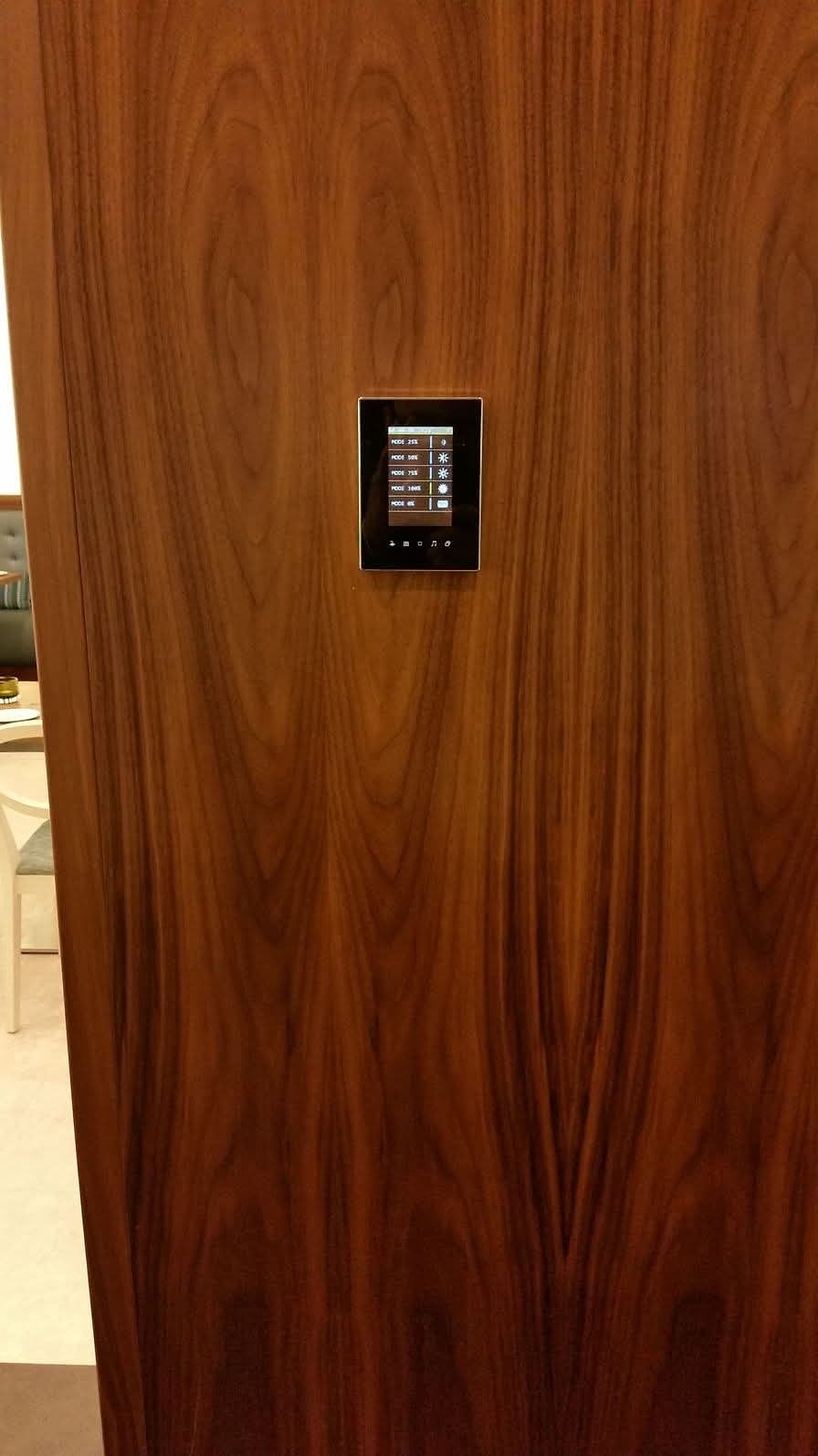
Set flush into the joinery beside the door. In a finished apartment the plate usually goes where a switch already is, on the wiring already in the wall, with nothing chased and nothing redecorated.
Our own installation
03
Leaving the apartment as we found it
The method is built around leaving the apartment as we found it. A survey opens one or two switch plates, checks the thermostat type and the wiring behind it, measures the curtain track and window reveal, looks at the entrance door, the intercom handset and the router position, and photographs the lot. From that comes a fixed written scope. On site the work runs room by room, with furniture moved and put back the same day, dust sheets down, and no chasing, drilling into finishes or redecoration unless it was agreed in writing beforehand. Where something genuinely needs a fixing, a new motorised curtain track for example, we show you exactly where it goes and what making good involves before anyone picks up a drill. Programming and scene tuning happen with you in the rooms at the end, because the names on your scenes should be yours.
04
Owning, renting, and the building's own rules
Whether you own or rent changes the specification more than it changes the design. An owner can commit to fixed items: a motorised track, a wall panel, a permanent thermostat, new door hardware. A tenant is better served by things that reverse cleanly, battery motors that unclip, plug-in modules, sensors on removable fixings, switch modules that come out with the original plate going back exactly as it was, and a hub that packs into a box on moving day. Anything we take off gets kept and labelled so the apartment can be handed back in its original state. Buildings run their own procedures too, and they vary: contractor access, permitted working hours, use of the service lift, notice for works, and anything touching common areas or the facade. We don't assume what yours requires. Confirm it with building management, and we will prepare the description of works and equipment list they ask for.
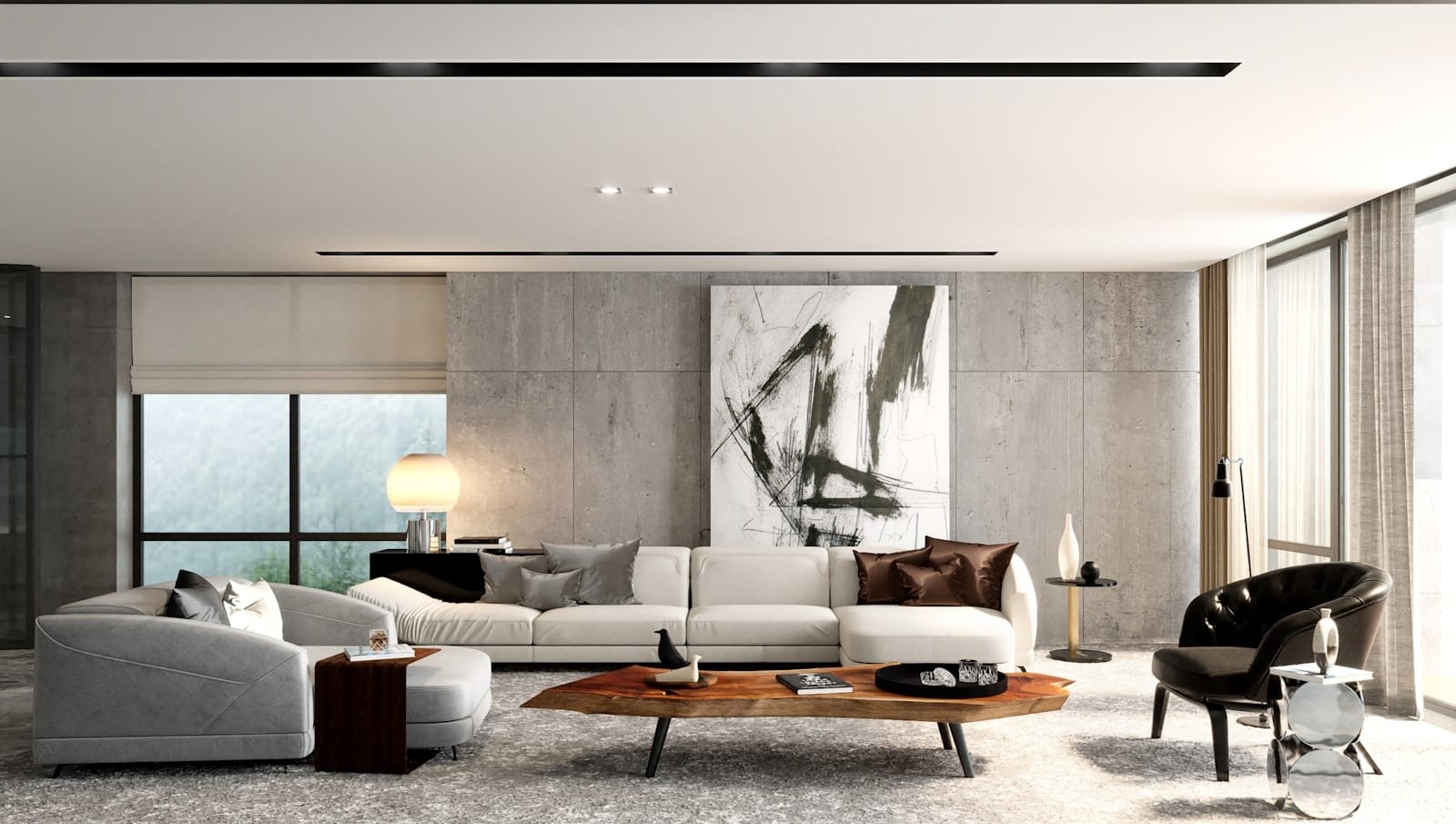
One living space doing four jobs across a day. Zoning it well matters more in an apartment than anywhere else, because there are fewer rooms to spread the work across.
Illustrative photography


Demonstration
Apartment Automation, in use
A page-sized study of the service in context. Final scenes and controls are written for the rooms and routine.

Good morning
Curtains open and the home wakes gently.
Lights
Curtains
Climate
Cooling
Security
Standby
Front door
Unlocked
Ceiling fan
Stopped
Screen
Idle
Simulated for this page. Scenes are written per project, around the rooms and the routine.
Illustrative
What it gives you
What a finished apartment can still gain
Hardware is the means. These are the things you notice once the system is live.
01
Full control, no chased walls
Modules fit inside existing switch back boxes, the thermostat swaps on the wiring already in the wall, and curtain motors work with the track you have. In most apartments the plates on the wall can stay exactly where they are. Nothing is replastered, nothing is repainted, and the apartment stays usable while the work goes on.
02
Cooling on a schedule instead of a habit
Most Dubai apartments are cooled by fan coil units fed from a central system, so the useful change happens at the wall controller, not the machinery. Schedules, occupancy logic and remote control mean the flat is cool when you get home instead of paying to cool an empty room all afternoon.
03
One app, one set of scenes
Bought one at a time, every smart product arrives with its own app and its own account. Here the lights, the AC, the blinds, the lock and the sensors sit on one platform. A single press dims the room, drops the blackout, settles the temperature and locks the door on the way to bed.
04
Reversible where it needs to be
If you rent, the specification is chosen so it comes out again: battery motors, removable fixings, modules that unclip with the original switching restored. Anything we take off is kept and labelled, and the handover documentation records what can be removed and how, so the end of a tenancy is not a negotiation.
Scope
What we fit in an apartment
Set at design stage, from the property and your priorities, never from a fixed package.
- Wireless lighting modules fitted inside existing switch back boxes
- Smart thermostat replacing the existing fan coil or split unit controller
- Battery or low-voltage curtain motors sized to existing tracks and reveals
- Blackout and sheer automation on full-height glazing
- Smart lock fitted to the existing entrance door where the door allows
- Integration with the building intercom handset where that system permits
- Door, motion, temperature and water leak sensors
- Scene and schedule programming for morning, evening, away and travel
- Wi-Fi review and hub placement so control stays reliable through concrete walls
- As-built documentation recording what is fixed, what is removable and how
Project detail
An apartment system is smaller than a villa's, not simpler in principle. The thermostat should know the blackout blind closed at midday, because that changes how hard the fan coil has to work through the afternoon. The lock and the intercom should be able to start a scene, so arriving home is one action, not four. Lighting should follow the same evening logic in every room instead of each space behaving to its own rules. That is the difference between commissioning a system and buying five smart products that happen to live in the same flat. It also means the system extends later without a rebuild: another room brought online, a second thermostat, a camera at the entrance door, all added along lines that were already documented.
Almost all apartment work is retrofit, and the toolkit above exists for exactly that. There is one exception worth knowing about. If you are taking handover of a new apartment, or stripping an older one back for a renovation, there is a short window before joinery, painting and furniture when a curtain track can be wired properly, a switch position can be added, a cable can be run to a television wall or a bedside panel, and a thermostat can be moved somewhere sensible. That window closes fast and the work is inexpensive while it is open. A short consultation at handover, with the apartment still empty, often changes what is possible for the whole time you live there.
In Dubai
Apartment Automation in Dubai
Climate, regulation and the way this city builds all shape the specification, before any equipment is chosen.
Dubai towers have a technical character of their own. Most apartments are cooled by fan coil units fed with chilled water from a central plant or a district cooling scheme, which means there is no outdoor unit to replace and no compressor to control. The useful change is at the wall controller, and which smart thermostat can replace it depends entirely on the wiring behind the existing one, which we verify before recommending anything. Cooling is often billed separately from DEWA electricity in these buildings, so better scheduling shows up on more than one bill. Full-height glazing is the other constant: a west-facing living room takes serious solar gain through the afternoon, which makes automated sheers and blackouts a cooling measure, not a decorative one.
The second reality is tenancy. A large share of Dubai apartments are rented on annual contracts and people move more often than they would in a villa, so we regularly design systems that install without permanent alteration and come out without a trace. Read your tenancy contract before anything is ordered: most require consent for alterations, and what counts as an alteration is not always obvious from the wording. Fully removable devices rarely cause a problem; replacing a thermostat or a door lock is worth a short written agreement that also records that the original will be reinstated. Owners associations and building management have their own procedures for works and contractor access as well, and those differ from building to building, so we ask you to confirm what yours requires instead of guessing on your behalf.
Where we do this work
Apartment Automation projects run across Dubai, and some communities change the method enough that we keep notes on them: Palm Jumeirah, Downtown Dubai, Business Bay. The full coverage list is on areas we serve.
Questions
Apartment questions, owners and tenants
Most of it. Wireless modules fit inside the back boxes of your existing light switches, so lighting comes under control without changing the plates on the wall. The air-conditioning controller is usually replaced like for like on the wiring already in place. Curtains and blinds run on battery or low-voltage motors fitted to the existing track. Locks fit to the existing door, and sensors stick or screw on. That takes a typical apartment to full lighting, cooling, shading, entry and scene control with no chased walls, no new cabling and no redecoration. The limits are physical, not technical: a switch in a new position, a curtain track where none exists, in-ceiling speakers or a cable to a new location all need building work, and those get flagged at the survey.
For a finished apartment, wireless is usually the correct engineering answer rather than a compromise. The alternative means cutting into finished walls and ceilings, which costs more, takes longer and leaves you redecorating, and the reliability gain in a space this size is small. What wireless asks of you is modest: a hub in a sensible position, a network that is actually healthy, batteries changed in curtain motors and sensors from time to time, and occasionally a repeater in a thick-walled layout. Wired genuinely wins when walls are already open, during a renovation or at handover of an empty apartment, and in those cases we will say so. Worth knowing: lighting modules behind your switches are wired to the circuit anyway. It is the control signal that travels wirelessly, not the power.
Almost everything on a standard apartment scope can be installed and removed by a tenant, provided it is chosen with that in mind from the start. Battery curtain motors, sensors, plug-in devices, cameras on removable mounts and the hub all leave with you. Switch modules sit inside the existing back box and come out with the original plate refitted, which is an electrician for an hour, not a redecoration. Two items need more thought, a replaced thermostat and a replaced door lock, because both mean removing something that belongs to the property. We keep the original hardware, labelled, and refit it at the end of the tenancy. Tell us at the survey that you're renting and the specification changes to suit.
Assume yes for anything fixed, and check both, because they are separate questions. Most tenancy contracts in Dubai require the landlord's consent for alterations, and the definition varies from one contract to the next. In practice, fully removable devices rarely cause an issue, while replacing a thermostat or a lock is worth a short written agreement that records the original will go back. Separately, buildings run their own procedures for contractor access, working hours and any work touching common areas, and these differ from building to building, so we won't tell you what yours permits. Ask building management, and we will supply the description of works, equipment list and installer details that such requests normally ask for.
Yes, if it was specified for that. Battery motors, sensors, plug-in devices, cameras and the hub pack up like any other belongings. Switch modules are removed and your original switching restored. What stays behind is anything genuinely built into the fabric of the property. At the new apartment we recommission the same equipment, adapt it to the new layout, add whatever the new place needs and reissue the documentation. It helps to say at the design stage that you expect to move within a year or two, because it changes which curtain motors and which lock make sense in the first place.
Book an Apartment Survey
Send us the apartment details and we will arrange a walkthrough. You'll get a plain list of what can be automated with no building work, what needs consent, what is reversible if you are renting, and a written scope before anything is ordered.
Villas, apartments, penthouses and offices across Dubai. New build, refit, or a system somebody else left you with.
Also in the system
What this usually goes in with
Specified, wired and commissioned by the same team on the same drawings, which is the reason they behave as one afterwards.
AC & Climate
Room-by-room climate control with schedules and occupancy awareness, comfort through a Dubai summer without waste.
Smart Curtains
Quiet motorised curtains, sheers and blinds that move with your scenes and manage sun, heat and privacy.
Locks & Access
Keyless entry, codes for family and staff, and access control that knows who comes and goes, with mechanical fallbacks.